
Upper East, Volta Lead Ghana’s Maternal Deaths as Regional Inequalities Deepen
Ghana continues to struggle with unacceptably high maternal deaths, with sharp regional disparities revealing deep-rooted inequalities in access to quality healthcare, according to a new national report.
The “State of Maternal Mortality in Ghana” report puts the country’s maternal mortality ratio at 301 deaths per 100,000 live births. The Upper East Region recorded the worst figures, with 465 maternal deaths per 100,000 live births, followed by the Volta Region at 393. Other high-burden regions include the North East (341), Upper West (335) and Ahafo (329).
Although Greater Accra recorded the lowest rate at 191 deaths per 100,000 live births, the figure still highlights persistent risks facing pregnant women nationwide and underscores Ghana’s struggle to meet global maternal health targets.
The report, compiled by the SDGs Advisory Unit at the Office of the President, the National Development Planning Commission (NDPC) and the United Nations Population Fund (UNFPA), points to a widening gap between urban and rural regions. Northern and remote areas were identified as requiring urgent, targeted interventions.
Presenting the findings, Principal Planning Analyst at NDPC, Nii-Odoi Odotei, noted that while Ghana has reduced the lifetime risk of maternal death from 13.4% in 2010 to 9.9% in 2021, nearly one in ten women still faces the risk of dying from pregnancy-related causes.
He attributed maternal deaths to a combination of direct medical causes such as excessive bleeding, hypertension, infections and unsafe abortions, as well as systemic challenges including shortages of blood and oxygen, weak referral systems, poor road networks, financial barriers and delays in accessing quality care.
Socio-economic factors also play a major role. Women with low levels of education were found to be three times more likely to die from pregnancy-related complications. Limited antenatal care attendance, reliance on herbal medicine, occupational risks in rural settings and dependence on traditional birth attendants further increase vulnerability.
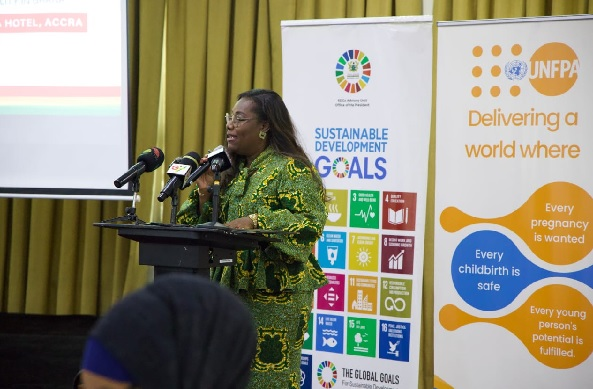
The findings were discussed at a High-Level Dialogue on Maternal Mortality Reduction held in Accra on Tuesday, December 23, under the theme “No Woman Should Lose Her Life to Give Life.” The event formed part of a presidential initiative aimed at accelerating maternal mortality reduction through stronger political leadership, institutional accountability and sustainable domestic financing.
Chairing a roundtable session, Deputy Chief of Staff Nana Oye Bampoe Addo described maternal deaths as a national crisis requiring urgent and decisive action. She revealed that nearly 900 maternal deaths recorded this year show that progress has stalled, stressing that incremental improvements are no longer sufficient.
She commended President John Dramani Mahama for elevating maternal mortality to a national priority and highlighted interventions such as the uncapping of the National Health Insurance Scheme, the Mahama Cares initiative and nationwide free health screenings led by First Lady Lordina Dramani Mahama.
Minister for Gender, Children and Social Protection, Dr Agnes Naa Momo Lartey, described maternal mortality as not only a health issue but also a human rights and gender equality crisis. She called for stronger emergency transport systems, improved blood supply chains, expanded psychosocial support and greater accountability at district and regional levels.
The dialogue concluded with a call for coordinated action across sectors, including health, transport, financing and community leadership, to ensure that childbirth in Ghana is no longer a life-threatening event for women.