The Absence of Regulatory Enforcement and Maintenance, The Bane of Fire Outbreaks in Ghana – Eamn
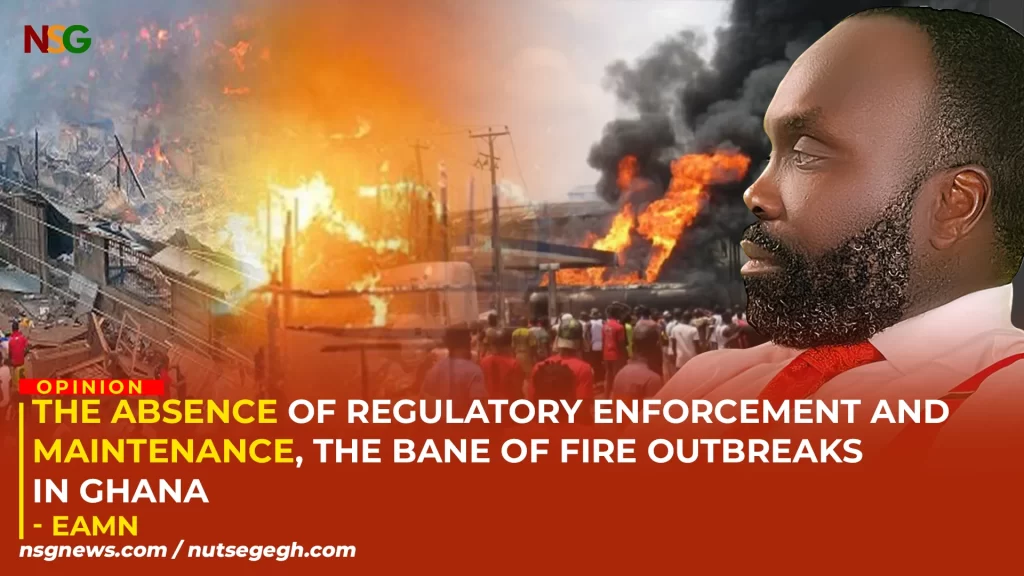
The trend of major devastating fires in Ghana looks to be falling out of hand and erratic power supply (dumsor) is another identified cause of domestic and commercial fire outbreaks that have ravaged Ghanaians in recent years and still is. The alarming statistics tell a grim story as the fire outbreaks keeps increasing.
While working on this write up late night on 18th June 2025, news alert pop up on my screen with yet another fire outbreak in Tema industrail area “behind Ferro Fabrik Limited at the Tema Heavy Industrial Area” and has destroyed structures in hundreds.
Despite this clear upward trend, we continue to witness devastating blazes that destroy livelihoods and properties nationwide. The recent fire outbreaks is Tema, Adum Market, Kumasi, Techiman, Kantamanto market in Accra, destroyed shops, obliterating the economic foundation for thousands of traders and many more.
The environmental group Greenpeace estimates at least 30,000 people work at the Kantamanto market market alone, processing millions of second-hand clothing items.
Furthermore, domestic fires have emerged as primary contributors to these outbreaks, with electrical faults due to illegal connections, poor and inferior wiring installation and devices, improper use of Liquefied Petroleum Gas (LPG), and misuse of naked flames like mosquito coils, candles, and lighters all playing significant roles.
The Northern Region alone recorded 373 fire cases last year, resulting in damages to properties estimated at GH₵68,127,224. These statistics aren’t merely numbers – they represent shattered dreams, lost investments. These preventable tragedies are occurring under the watch of regulatory bodies meant to protect us.
The absence of fire hydrants, negligence in enforcement, and poor maintenance culture have transformed an solvable safety concern into a national crisis we can no longer afford to ignore.
In one instance, a fire hydrant was built over and the questions is how did the individual receive permit or approval from planning to construct the structure over the fire hydrant?
Fire outbreaks across Ghana represent a national crisis demanding immediate attention. While reading articles on this subject, I’ve realised how devastating these incidents have become, with alarming statistics showing thousands of fire incidents recorded to date and counting and while working on this write up, there was yet another fire outbreak in Teme. Undoubtedly, these numbers reflect shattered dreams and preventable tragedies affecting thousands of Ghanaians.
The economic impact remains staggering. Losses exceeding GH¢68 million in the Northern Region last year demonstrate the financial burden these disasters place on the victims.
Additionally, the psychological trauma inflicted on victims like Barbara from Kantamanto Market reveals wounds that statistics cannot quantify.
Regulatory failure stands at the core of this crisis. Despite having adequate laws, weak enforcement, corruption, and negligent maintenance culture have created dangerous conditions where preventable fires flourish.
Stattistics shows that, markets, media houses, and residential buildings continue to operate without proper safety measures, essentially functioning as “ticking time bombs”.
The path forward requires comprehensive reform. Increased budgetary support for emergency services must happen alongside strengthened regulatory frameworks.
Similarly, implementing daily market patrols, enforcing building codes, and modernizing firefighting infrastructure will create layers of protection currently absent.
We cannot afford to continue treating urban domestic and commercial fires as “minor risks” while thousands lose their livelihoods yearly. Though the Ghana National Fire Service has begun implementing changes, these efforts must accelerate and expand.
After all, fire safety represents not merely a regulatory tickbox exercise but a fundamental right for all Ghanaians.
Until we address the root causes—poor electrical systems, inadequate enforcement, corruption and limited resources for firefighting—these preventable tragedies will persist.
Our collective responsibility involves demanding accountability from government and regulatory bodies while embracing personal fire safety measures. Only then can we transform Ghana’s troubling fire outbreak narrative into one of prevention rather than response.
Ghana Must Work, Ghana Can Work, Let’s Make Ghana Work