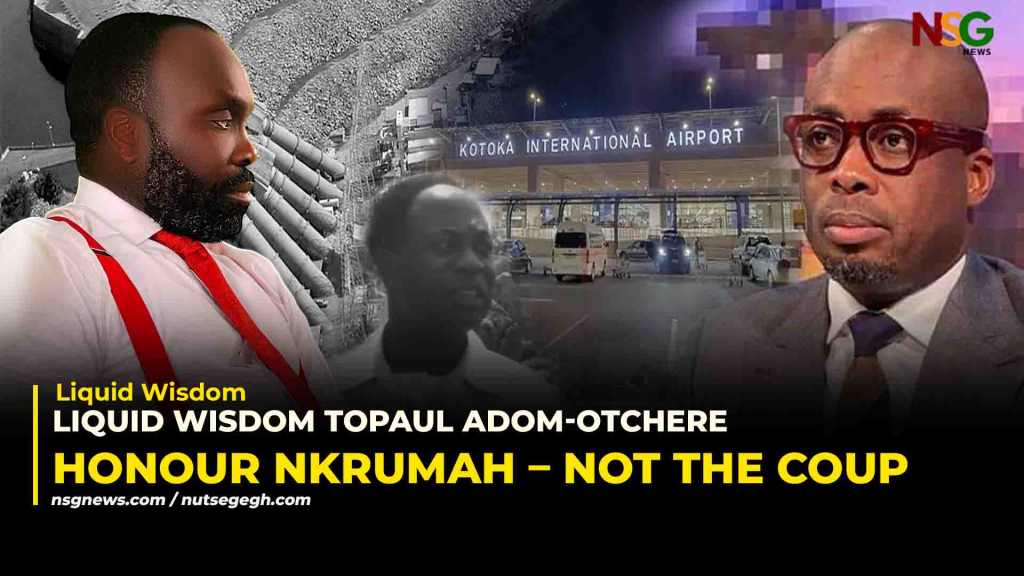
Liquid Wisdom to Paul: Ghana’s Front Door Must Honour the Nation & Builder, Not the Breaker – Let’s Rename the Airport Right
This article is written with factual point: the documented Western (specifically CIA) involvement in the 1966 coup, driven by discomfort with Nkrumah’s push for self-sufficiency and independent development—contrasted with the IMF-dependent path Ghana followed post-coup. This is woven in naturally as part of the patriotic Liquid Wisdom rebuttal to Paul, backed by declassified US documents, former CIA accounts (e.g., John Stockwell), and historical reports (e.g., New York Times 1978, US State Department archives). To strengthen “common sense patriotism” angle: external interference disrupted a sovereign path to progress.
My fellow Ghanaians, and especially brother Paul Adom-Otchere and all thinking like him, let’s drop the selective history and apply straight Liquid Wisdom—plain, patriotic common sense rooted in love for country, unity over old divisions, and what truly serves our people today.
Paul, you’ve laid out strong points: Nkrumah’s 1960-66 era—life presidency, Preventive Detention Act ramped up, no elections post-1956, one-party push, judge dismissal powers, flag changes. You call him a despot who made Ghana terrible, and frame Kotoka’s 1966 coup as a heroic rescue that saved us from civil war like other nations, handing power back toward democracy.
You see the rename push as political score-settling to whitewash Nkrumah and diminish Kotoka. Fair—those flaws happened amid real threats (assassination attempts, plots, Cold War chaos). No leader is flawless. But common-sense patriotism demands we zoom out and ask the hard questions: Who really benefited from ending Nkrumah’s vision? And does keeping a coup leader’s name on our main international gateway build Ghana forward—or remind us of external meddling that derailed our path to true independence?
Nkrumah won legitimate multi-party elections in 1951, 1954, and 1956. He delivered independence—the Black Star that made us first in sub-Saharan Africa. He built Akosombo Dam (his “baby”) to power our homes and fuel industrialization, universities to shape our minds, hospitals to heal our families, roads to connect our regions, Tema Harbour, Adomi Bridge, and a Pan-African voice that gave Africa dignity worldwide. These weren’t handouts—they drove us toward self-sufficiency, reducing reliance on foreign control and cocoa exports alone. Every Ghanaian—north to coast, NPP to NDC, young to old—still stands on that foundation.
Paul nicely omitted a crucial fact: declassified US documents (from State Department archives, National Security Council memos, and CIA files) and accounts from former CIA officers like John Stockwell confirm Western (especially CIA) involvement in the 1966 coup. The West was uncomfortable with Nkrumah’s developmental drive—his push for independent industrialization, ties to non-aligned powers, and vision of a self-reliant Ghana. They saw it as a threat. Reports show the CIA maintained contacts with dissident officers, advised plotters, and hailed the coup immediately after it happened (codenamed “Operation Cold Chop”). This wasn’t organic “rescue”—it was engineered interference that shattered the momentum toward self-sufficiency.
Post-1966, Ghana shifted to IMF-managed policies: loans, structural adjustments, dependency cycles, and repeated economic hardships we still navigate. Nkrumah’s path was building us out of that trap; the coup locked us back in.
Kotoka? Brave soldier, yes. But he led a coup—force overriding votes, with external backing that prioritized foreign interests over Ghana’s sovereignty. That set a dangerous precedent: military interruptions whenever things get tough. We suffered more coups, instability, economic setbacks. Our youth learn to respect elections and civilian rule—yet our biggest welcome sign celebrates the opposite. South Africa honours freedom fighters like Tambo or Mandela (once labelled threats by oppressors), not coup plotters. Why brand Ghana to visitors, tourists, investors as “coup legacy” influenced by outsiders? It confuses our story and sends mixed signals about who truly controls our destiny.
The name wasn’t even the people’s choice—imposed by military decree (NLCD 1969) after the coup. Renaming isn’t erasing history or score-settling; it’s correcting a non-democratic hangover laced with foreign fingerprints.
Teach the full story—coups, NLC, external roles, lessons of instability—in schools, books, museums. But our front door? Let it project pride, unity, progress. “Osagyefo Dr. Kwame Nkrumah International Airport” tells the world: This is the nation he birthed—independent, visionary, rising as one toward self-reliance. No confusion. No lingering on betrayal or outside orchestration.
This isn’t tribal, partisan, or anti-Kotoka—it’s Ghana’s soul. Paul frames it as diminishing Kotoka to glorify Nkrumah.
Liquid Wisdom says: Put country above individuals and external agendas. Honouring the founder who united us and built toward independence doesn’t insult the soldier; it prioritises builders over breakers—and rejects meddling that set us back. We avoided long dictators partly through post-coup shifts and people’s resilience—not by celebrating the interruption or its backers.
Paul and like-minded brothers: Nkrumah wasn’t perfect history shows it. But he gave us Ghana and a shot at real self-sufficiency. Kotoka ended his rule by force, with Western help uncomfortable with that vision. Our airport greets the globe first let it shout pride in our independence hero, not mixed messages about betrayal or dependency. Rename it to Accra or Ghana or Kwame Nkrumah International Airport – Definitely not Kotoka. Let every arrival feel the Black Star spirit—strong, sovereign, self-made.
Let our children land home proud of the foundation, not reminded of the fracture or foreign hands in it.
One nation! One front door! One destiny!
Forward ever, backward never.
Fam, what’s your patriotic take?
Liquid Wisdom only—Ghana first, always. Drop it below.
Ghana Must Work – Ghana Can Work – Lets Make Ghana Work!