
High Court Dismisses Chief Justice Torkornoo’s Judicial Review Application
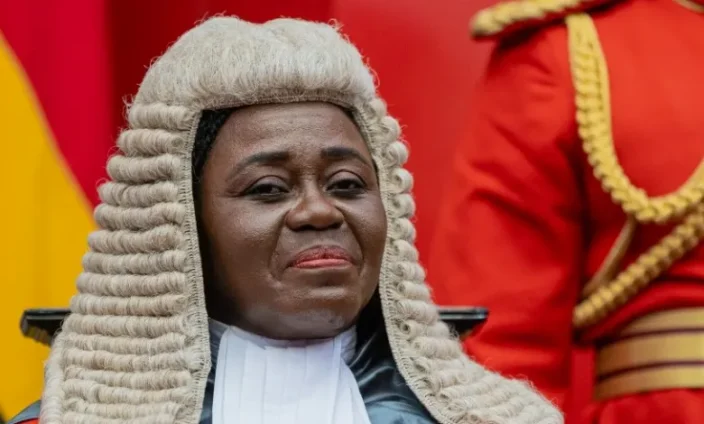
The Human Rights Division of the Accra High Court has dismissed an application filed by Chief Justice Gertrude Torkornoo, seeking a judicial review of ongoing removal proceedings against her. The court ruled on July 31 that the application was an “abuse of court processes” and stated further that it lacked jurisdiction to entertain the matter.
This marks a second major legal defeat for the Chief Justice, who has been battling multiple petitions seeking her removal from office. The ruling underscores the judiciary’s firm stance on preserving the integrity of the constitutional procedure laid out for addressing complaints against sitting justices.
The phrase “abuse of court processes” carries significant legal weight. It suggests that the court viewed the application not as a sincere pursuit of justice, but rather as an attempt to obstruct or delay the constitutionally mandated inquiry. While the full judgment is yet to be released, the implication is clear: the court found no lawful basis to interfere with the ongoing process.
This comes just months after the Supreme Court, in May 2025, unanimously dismissed an earlier application by Justice Torkornoo which sought to suspend the work of the special investigative committee set up under Article 146 of the 1992 Constitution. The High Court’s decision now adds another layer of legal validation to the continuation of those proceedings.
Justice Torkornoo, who became Ghana’s 15th Chief Justice in June 2023 and the third woman to hold the position, has publicly maintained that the petitions against her are politically motivated and lack constitutional merit. In a press briefing on June 25, she declared that she would not resign, claiming the process is both “flawed” and “cruel.” She also alleged that she had received veiled threats urging her to step down.
As the constitutional process unfolds, questions now arise:
What precedent is being set when a sitting Chief Justice is subjected to removal proceedings? Is the legal system immune from political interference in such high-profile cases? And ultimately, can public confidence in the judiciary be sustained when its own head challenges the very process meant to hold her accountable?
These are questions that go beyond the individual at the centre of the storm and strike at the heart of judicial independence in Ghana’s democracy.