Ghana’s oil exports drop by over $1bn in the first 10 months of 2025
Ghana’s oil export earnings have declined sharply in 2025, with fresh data from the Bank of Ghana revealing a loss of more than $1 billion within the first ten months of the year.
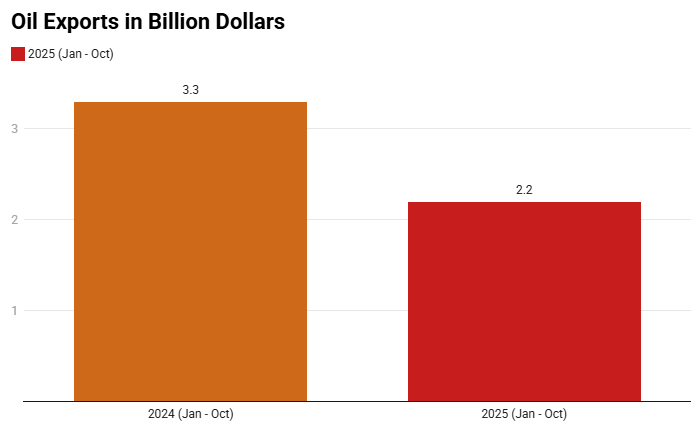
According to figures analysed by JoyNews Research, oil exports stood at $2.2 billion by the end of October 2025, down from $3.3 billion recorded over the same period in 2024. This represents a year-on-year decline of approximately $1.12 billion.
The drop has been attributed to a combination of lower global oil prices and declining domestic production.
International crude oil prices entered 2025 slightly above $70 per barrel but have trended downward throughout the year, falling to around $59 at their lowest point and currently averaging about $60 per barrel. This is significantly below the $70–$80 price range that dominated much of 2023 and 2024, marking the weakest pricing environment since late 2021.
While falling prices have affected oil-producing countries globally, Ghana’s situation has been worsened by declining output. Unlike producers that have offset price declines with increased production, Ghana’s crude oil output has been on a steady downward trajectory.
Production peaked in 2019 at 71.4 million barrels but has fallen each year since. In 2024, total output dropped to about 48 million barrels. For 2025, the Public Interest and Accountability Committee projected production of 46.3 million barrels, though current trends suggest this target may not be met.
Earlier government ambitions to reach 500,000 barrels per day by 2024 have not materialised. Current production in 2025 averages roughly 126,994 barrels per day, far below expectations.
Recent data highlight the slowdown. In the first half of 2025, Ghana produced 18.4 million barrels of oil, compared with 24.8 million barrels during the same period in 2024 a decline of nearly 26 per cent.
Government revenue from oil has fallen even more sharply. Receipts dropped by 56 per cent, declining from $840 million in the first half of 2024 to just $370 million in the corresponding period of 2025.
At the same time, Ghana’s petroleum import bill has increased. Imports of refined petroleum products rose by approximately $500 million within the first ten months of 2025 compared with the same period last year.
This translates into average monthly petroleum imports of about $430 million, up from roughly $390 million in 2024. The combination of shrinking export earnings and rising import costs has intensified pressure on the balance of payments and increased demand for foreign exchange.
Analysts say the challenges facing the petroleum sector are rooted in deeper structural issues. A lack of new petroleum agreements and policy uncertainty in the upstream industry have reduced investor confidence, limiting new exploration and production activity.
With no significant new wells coming on stream, output continues to decline, increasing Ghana’s reliance on imported refined petroleum products.
Experts argue that expanding domestic refining capacity could help curb imports and ease pressure on the cedi. Petroleum imports currently average about $400 million per month, and reducing this figure would significantly improve Ghana’s external position.
The Ghana Petroleum Hub initiative is expected to help position the country as a regional supplier of refined petroleum products, but progress will depend on consistent policy direction and sustained investment.
Without decisive reforms, Ghana risks remaining trapped between declining oil production, weak export earnings and rising import costs — turning oil into a growing economic vulnerability rather than a stabilising force.