Ghana rejects foreign pressure, proceeds with new gold royalty reform
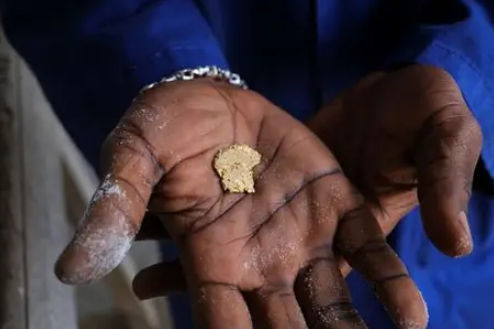
The Ghana government has confirmed it will proceed with a new sliding-scale gold royalty regime aimed at increasing the country’s share of mining revenues, despite concerns raised by foreign governments and some mining companies.
The new policy replaces the existing flat five per cent royalty rate applied to gold mining with a price-linked system that increases government earnings when global gold prices rise.
New royalty structure
Under the new framework, mining companies could pay royalties of up to 12 per cent when gold prices reach $4,500 per ounce, according to details reviewed by Reuters.
The reform is intended to allow Ghana to benefit more from high global commodity prices while maintaining a competitive investment environment.
Foreign concerns over policy
The changes have drawn criticism from some diplomatic missions and industry leaders who fear the new structure could discourage investment in the mining sector.
Reports indicate that the United States, China and several Western governments recently engaged Ghanaian authorities in discussions urging the country to reconsider the policy.
However, the Chief Executive Officer of the Minerals Commission, Isaac Tandoh, said the government would continue with the reforms.
“They met us, they are not against the review in principle,” he told Reuters.
He explained that while some foreign representatives expressed concerns about the top 12 per cent royalty rate, they did not oppose the broader review of the royalty system.
Proposal rejected
According to Isaac Tandoh, some diplomatic representatives suggested that the highest royalty band should only apply when gold prices reach $5,000 per ounce.
Ghanaian authorities, however, declined that proposal and decided to maintain the planned structure.
Lithium also included
The new framework will also introduce a sliding-scale royalty regime for lithium production, with rates ranging between five and 12 per cent depending on global prices.
Lithium royalties will be tied to market prices between $1,500 and $3,200 per metric tonne, while other minerals will continue to attract the current flat royalty rate of five per cent.
Industry raises concerns
Mining industry leaders have warned that the policy could influence future investment decisions.
The Ghana Chamber of Mines has raised concerns about the potential impact of the new regime.
Its Chief Executive Officer, Kenneth Ashigbey, cautioned that the policy could reduce the number of new mining projects.
Government defends reform
Despite these concerns, Isaac Tandoh said government modelling shows the sliding-scale system would balance increased state revenue with reasonable profit margins for mining companies.
He also argued that investors are more concerned about regulatory certainty than modest increases in operational costs.
The policy change comes at a time when gold prices are trading above $5,000 per ounce on international markets.
Officials say the reform forms part of a broader strategy by Ghana and several other African nations to capture a larger share of revenues from natural resources amid rising global commodity prices.