
Food Insecurity Rises to 38.1%; 12.5 Million Ghanaians Struggle to Access Food – GSS
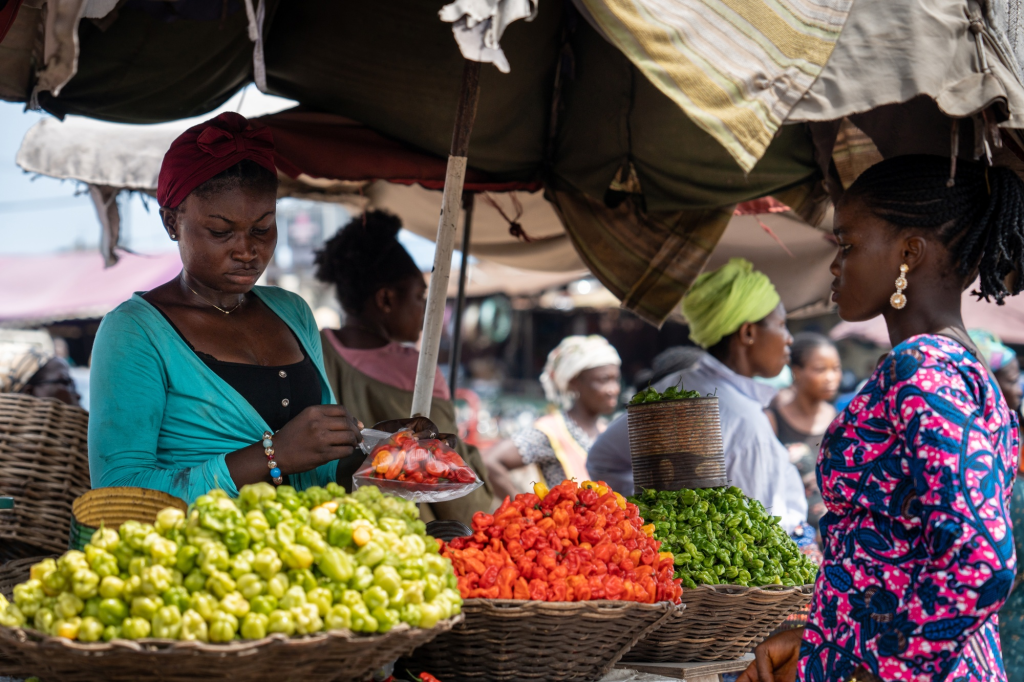
Food insecurity in Ghana remains high and unevenly distributed, affecting an estimated 12.5 million people as of the third quarter of 2025, despite a slight improvement from earlier in the year, the Ghana Statistical Service (GSS) has revealed.
According to the latest Quarterly Food Insecurity Report, national food insecurity prevalence rose from 35.3 per cent in the first quarter of 2024 to 38.1 per cent in the third quarter of 2025, underscoring growing vulnerability across households.
Presenting the report in Accra, Government Statistician Professor Alhassan Iddrisu described food insecurity as a major development challenge with implications that extend beyond welfare.
“Food insecurity is not just a social issue,” he said. “It affects household welfare, child health, labour productivity, business confidence and national development.”
The report, which covers the period from Q1 2024 to Q3 2025, draws on data from the Quarterly Labour Force Survey and supports Sustainable Development Goal Two, which aims to end hunger, improve nutrition and promote sustainable food systems.
Volatile trend despite recent easing
Although food insecurity declined slightly from its peak in the second quarter of 2025, the overall trend remains upward.
In absolute terms, the number of food-insecure persons increased from 11.2 million in Q1 2024 to a peak of 13.4 million in Q2 2025, before falling to 12.5 million in Q3 2025.
“Just within one quarter, the number of food insecure persons reduced by about 900,000,” Prof Iddrisu said, but cautioned that the figure remains troubling.
“Twelve and a half million people is still very significant. As a country, we must do everything possible to bring that number down.”
He explained that food insecurity in Ghana is highly responsive to economic shocks, seasonal patterns and unexpected disruptions, making it volatile and difficult to manage.
Measuring food insecurity
The GSS measures food insecurity using the Food Insecurity Experience Scale (FIES), aligned with SDG Indicator 2.1.2, allowing for international comparison.
Households are assessed based on eight questions related to food-related anxiety, reduced food intake and extreme deprivation over the preceding three months.
Households answering “yes” to four to six questions are classified as moderately food insecure, while those answering “yes” to seven or eight are considered severely food insecure.
Gender and regional disparities persist
The report highlights sharp disparities across gender and regions.
Female-headed households were consistently more affected by moderate food insecurity, with the gap widening to 6.2 percentage points in the third quarter of 2025.
“This likely reflects structural factors such as income gaps, employment opportunities and caregiving responsibilities,” Prof Iddrisu noted.
Regionally, the Upper West Region recorded the highest food insecurity prevalence at 55.9 per cent, followed by the Volta Region (50.1 per cent) and the North East Region (45.9 per cent).
By contrast, the Oti Region recorded the lowest prevalence at 18.4 per cent, creating a gap of 37.5 percentage points between the most and least affected regions.
“This tells us that food insecurity in Ghana is deeply spatial and not evenly distributed,” the Government Statistician said.
Rural households and vulnerable groups most affected
Rural households were found to be more vulnerable than urban households, particularly in terms of food-related anxiety.
About 53 per cent of households nationwide reported worrying about food availability in the third quarter of 2025, rising to 60 per cent in rural areas, compared to 48 per cent in urban centres.
Food insecurity was highest among households with both children and elderly members, averaging 44 per cent in the first three quarters of 2025.
The link between food insecurity and child nutrition was especially stark. Households with malnourished children recorded food insecurity rates of about 44 per cent, while rural, female-headed households with underweight children recorded rates exceeding 80 per cent in Q3 2025.
“This is not just a food issue; it is a human capital issue with long-term consequences for learning, productivity and health,” Prof Iddrisu warned.
Education offers protection
Education emerged as one of the strongest protective factors.
Food insecurity declined steadily with higher educational attainment, from about 50 per cent among households with no education to roughly 15 per cent among households with tertiary education.
“Education matters a lot in addressing food insecurity,” the Government Statistician stressed.
Severe food insecurity eases slightly
At the national level, severe food insecurity declined marginally from 5.1 per cent in Q2 2025 to 4.6 per cent in Q3 2025, though it remained highest among rural, female-headed households.
“Even when severe deprivation is relatively low, widespread moderate insecurity still affects daily life,” Prof Iddrisu noted.
Poverty, unemployment and food insecurity intersect
The report also identified a growing overlap between food insecurity, multidimensional poverty and unemployment.
Between the second and third quarters of 2025, the number of people facing all three challenges increased by 19,455, representing a 9.4 per cent rise.
“Though modest in number, this represents deep structural vulnerability,” he said.
Recommendations and regional context
To address the situation, the report recommends targeted interventions in high-burden regions, expanded nutrition-sensitive social protection, stronger links between food security and job creation, and increased investment in education and rural resilience.
Despite the challenges, Ghana’s performance compares favourably with several countries in the sub-region. In 2023, food insecurity prevalence stood at 74.8 per cent in Nigeria, 73.9 per cent in Kenya and 61.4 per cent in Ethiopia, compared with 38.1 per cent in Ghana.
However, Prof Iddrisu noted that countries such as Egypt, South Africa and Brazil have recorded lower rates, indicating room for improvement.
He concluded by thanking survey households, field officers, development partners, the media and staff of the GSS, reaffirming the Service’s commitment to producing timely and credible data to support national development.