Abu Jinapor Slams 13.1bn Cedi Jet and Helicopter Plan in Budget Debate
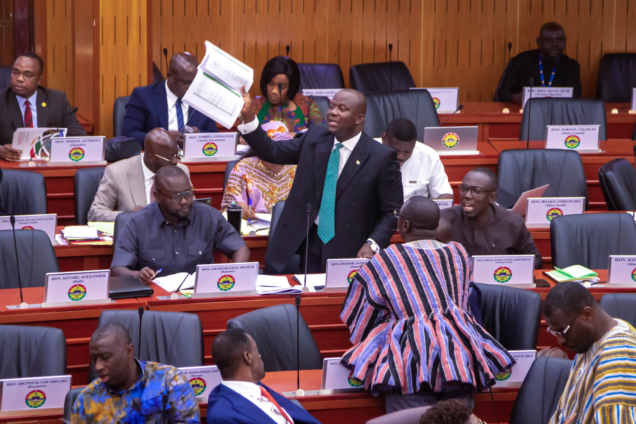
The Member of Parliament for Damongo, Samuel A. Jinapor, has sharply criticised the government for what he calls misplaced priorities, alleging that the administration intends to spend 13.1 billion cedis on four helicopters and two presidential jets while many public sector workers remain unpaid.
Speaking during the debate on the 2026 Budget Statement and Economic Policy, he questioned why such a sizeable allocation was being made for high value assets when nurses, teachers and other public workers are reportedly struggling to receive their salaries. He argued that the proposed expenditure does not reflect the pressing needs of citizens who are dealing with rising costs and limited opportunities.
Mr Jinapor said the move contradicts the government’s earlier promises to ease the cost of living and promote employment. He noted that traders, farmers and young people continue to face economic pressure, yet essential public services lack the resources required to function effectively.
24 Hour Economy Concerns
The MP also challenged the government’s claims that its 24 hour economy programme has fully commenced. He said there is no practical evidence that the initiative is functioning, and questioned how additional workers could be recruited when existing staff in key sectors are reportedly unpaid.
Referencing his party’s proposed three shift model, he argued that basic public services are already struggling and cannot take on additional operational demands without addressing staffing and compensation challenges.
Macroeconomic Gains Not Felt on the Ground
Although the budget highlights lower inflation and improved spending controls, Mr Jinapor maintained that these indicators are not being felt by households and businesses. He cited the government’s own admission that spending for the first three quarters of the year was 15 percent below target, saying this underinvestment is limiting business growth, reducing access to credit and contributing to payment delays across several sectors.
He further pointed to reports of over one million metric tonnes of paddy rice deteriorating in storage due to weak demand, describing it as a sign of deepening economic strain.
Rising Government Size and Fiscal Pressures
Mr Jinapor questioned the expansion of government appointments, noting the creation of new envoy roles and the appointment of eighteen deputy heads of mission. With the Bank of Ghana warning about rising compensation costs, he said it was difficult to justify an increase in the wage bill while salary arrears persist. He highlighted that compensation for the Office of the President is projected to rise from 326 million cedis in 2024 to 540 million cedis in 2025.
A Budget Misaligned With Public Needs
The MP concluded that the budget does not address the immediate concerns of traders, farmers, small businesses or unemployed youth. He argued that injecting liquidity into the economy, supporting production and prioritising job creation should be at the forefront of government spending decisions rather than expensive military procurements.
He urged the Finance Minister and the Bank of Ghana to act swiftly to restore confidence and stabilise the economic environment.