DDEP Strained Banks’ Balance Sheets but Sector Is Recovering, BoG Governor Says
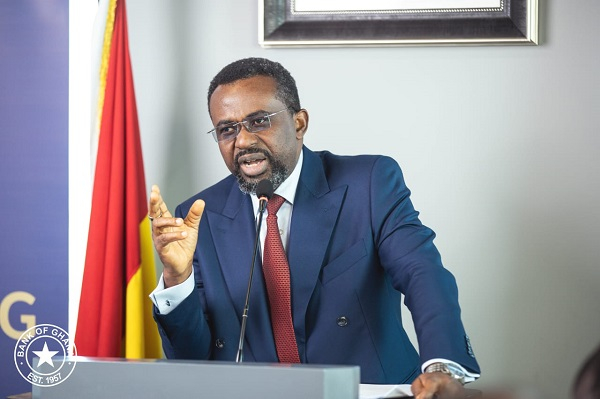
The Governor of the Bank of Ghana, Johnson Pandit Asiama, has revealed that the Domestic Debt Exchange Programme placed significant pressure on the balance sheets of banks during its early stages.
According to him, the programme, although necessary to restore Ghana’s debt sustainability, eroded capital buffers and limited lending across the banking sector.
Dr Asiama explained that financial institutions had to adjust to lower returns on government securities while also dealing with rising levels of non-performing loans.
Sector gradually recovering
Addressing the Parliamentary Committee on Economy and Development at Parliament House, the BoG Governor said ongoing recapitalisation efforts and strengthened regulatory oversight were helping the banking sector recover.
“The banking system entered 2025 still adjusting to the effects of the DDEP, but through close supervisory engagement and recapitalisation, the system has strengthened considerably,” he stated.
He added that improvements in capital adequacy, declining non-performing loans and rising deposits were signs that confidence in the banking sector was gradually returning.
Banks rebuilding capital buffers
Dr Asiama noted that banks had taken steps to stabilise their operations and rebuild capital buffers following the shocks triggered by the debt exchange programme.
He said asset quality had improved significantly, with the non-performing loan ratio declining from 21.8 percent to 18.9 percent.
According to him, banks are now working towards reducing the ratio to 10 percent by the end of 2026.
Capital adequacy within the sector has also strengthened, rising to 17.5 percent, which is well above the 13 percent regulatory minimum.
Monetary policy measures
Dr Asiama further explained that the central bank had implemented several coordinated policy measures to restore macroeconomic stability and rebuild confidence in the financial system.
He said the Monetary Policy Committee had maintained a tight monetary policy stance to contain inflation and stabilise the economy.
These measures were designed to ensure that liquidity conditions within the financial system aligned with the central bank’s policy direction, thereby strengthening the transmission of monetary policy to market interest rates.
Strengthening Ghana’s external reserves
The Governor also indicated that rebuilding Ghana’s external buffers had become a key part of the country’s broader economic stabilisation strategy.
He noted that international reserves had improved through stronger export earnings, remittance inflows and the Domestic Gold Purchase Programme.
Under the programme, Ghana’s gold holdings increased from about 8.7 tonnes in 2021 to more than 40 tonnes by October 2025.
However, the sharp rise in global gold prices increased gold’s share of the country’s reserves to about 42 percent, creating a concentration risk.
Portfolio rebalancing
To address this risk, Dr Asiama said the central bank undertook a portfolio rebalancing strategy by converting part of its gold holdings into foreign exchange assets.
“This action did not represent a loss of Ghana’s national assets. The gold was simply converted into foreign exchange assets, which remain part of Ghana’s international reserves,” he explained.
Dr Asiama added that the policies implemented by the central bank were already producing positive outcomes, including declining inflation, improved exchange rate stability and stronger international reserves.