Ato Forson Unveils Gold-Backed External Reserves Policy Targeting 15 Months Import Cover
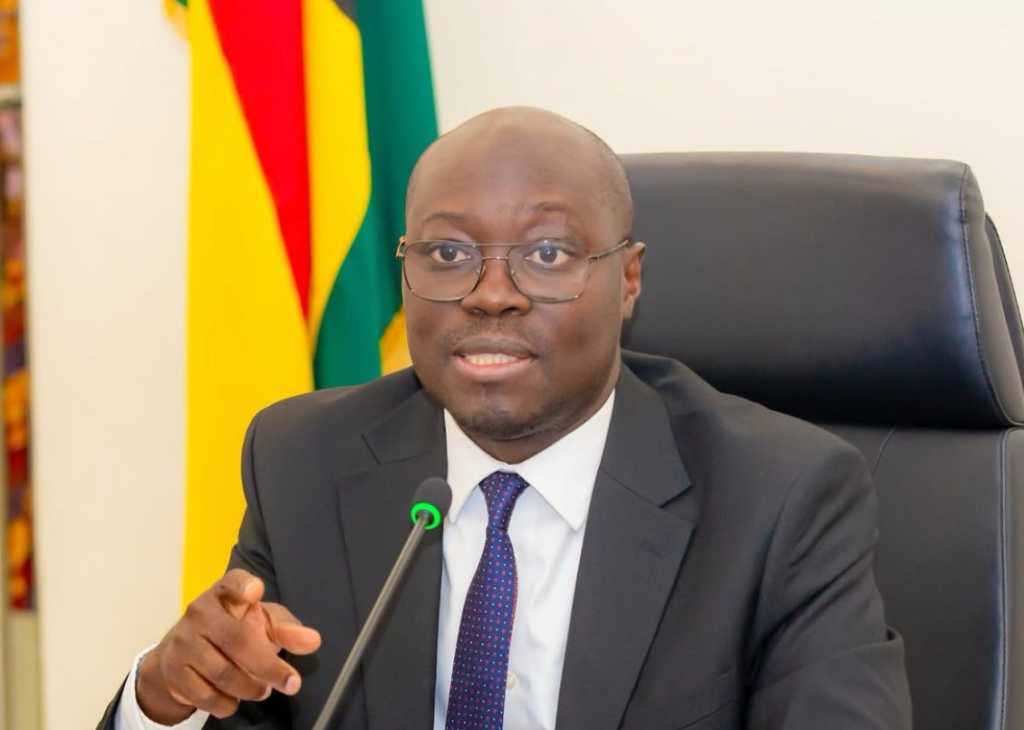
The Minister of Finance, Cassiel Ato Forson, has unveiled a new national strategy aimed at deliberately strengthening Ghana’s external buffers and safeguarding long-term macroeconomic stability.
The policy, dubbed the Ghana Accelerated National Reserve Accumulation Policy (GANRAP – 2026–2028), targets building the country’s gross international reserves to the equivalent of 15 months of import cover by the end of 2028.
Strategic shift in reserve management
Dr Forson described the initiative as a historic shift away from costly borrowing, short-term swaps and Eurobond issuances towards a structured, gold-backed and reform-driven accumulation framework.
The policy is anchored in the Ghana Gold Board Act, 2025, which mandates the Ghana Gold Board (GoldBod) to generate foreign exchange and support gold reserve accumulation by the Bank of Ghana.
Laying the policy before Parliament, Dr Forson — who also serves as MP for Ajumako Enyan Essiam — set intermediate targets of 8.6 months of import cover by December 2026 and 11.8 months by the end of 2027, culminating in the 15-month goal in 2028. Achieving this would require an average annual addition of $9.5 billion to gross international reserves.
Gold accumulation plan
Under GANRAP, GoldBod will acquire up to 2.4 tonnes of gold weekly from artisanal and small-scale miners, backed by budgetary allocations from the Ministry of Finance.
In addition, the Ministry of Lands and Natural Resources will exercise pre-emption rights to purchase at least 0.57 tonnes weekly from large-scale mining companies.
The gold will be refined locally before being shipped to London Bullion Market Association (LBMA)-certified refineries for standardisation into bullion bars for integration into Ghana’s reserves. Sales of accumulated gold will be subject to prior approval by Cabinet and Parliament.
Dr Forson stressed that the framework prioritises transparency, strict enforcement of mining sector commitments, local value retention and cost efficiency.
Broader structural reforms
Beyond gold, the policy integrates measures to expand foreign exchange inflows and reduce persistent outflows. These include:
- Scaling up non-traditional exports
- Revitalising cocoa productivity
- Implementing the national integrated oil palm development policy
- Accelerating oil field developments such as Pecan
- Conserving foreign exchange through a Gas-to-Power Transformation Policy
Rationale for the build-up
The Minister argued that the traditional benchmark of three months of import cover is no longer sufficient given global economic volatility. He described the 15-month target as an “economic war chest” designed to protect currency stability, restore investor confidence and break the cycle of economic downturns.
He cited improvements in key macroeconomic indicators following the 2022–2023 crisis, including stronger GDP growth, declining inflation, lower Treasury bill rates, reduced public debt ratios and reserves rising to $13.8 billion — equivalent to 5.7 months of import cover by the end of 2025.
He also referenced Ghana’s 2022 debt default and subsequent request for support from the International Monetary Fund in May 2023, noting that over-reliance on short-term reserve-building tools had contributed to past vulnerabilities.
Parliamentary reactions
Majority Leader Mahama Ayariga described the initiative as a significant long-term intervention, arguing that high gold prices present an opportunity to build buffers for future downturns.
MP for Bolgatanga Central, Isaac Adongo, dismissed claims that $10 billion had been injected into the market to stabilise the cedi, stating that foreign exchange market interventions were largely intermediated flows rather than reserve depletion. He, however, acknowledged the liquidity costs of gold accumulation and called for broader national dialogue.
Minority Leader Alexander Afenyo-Markin criticised the policy focus on macroeconomic indicators, arguing that unemployment, electricity tariffs and cocoa producer prices remain pressing concerns for ordinary citizens.
MP for Tano North, Gideon Boako, expressed support for strengthening reserves but questioned whether the country was shifting entirely toward gold reserves or maintaining a balance between gold and foreign exchange holdings.
Next steps
Speaker of Parliament Alban Bagbin referred the policy statement to the Finance Committee, with the Committee on Economy and Development directed to join in reviewing it before submitting a report for parliamentary adoption.