
Asantehene calls for strict enforcement of law recognising Naba Azoka II as Bawku Chief
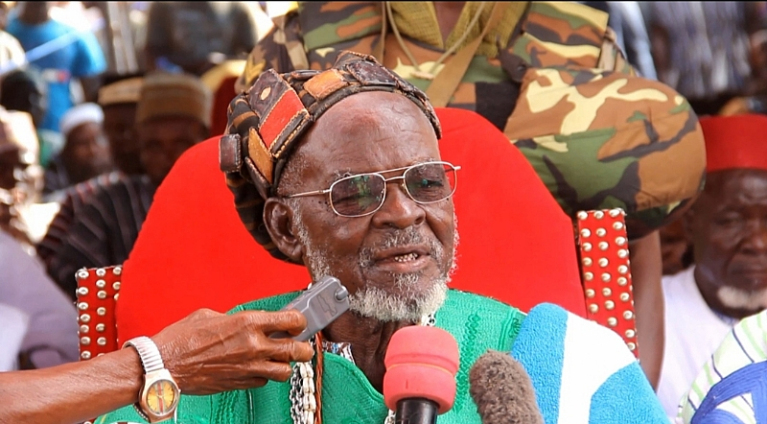
The Asantehene, Otumfuo Osei Tutu II, has called on the government to firmly enforce existing laws that recognise Zugraan Naba Asigri Abugrago Azoka II as the legitimate Chief of Bawku and head of the Kusasi Traditional Area.
The call forms the final and non-negotiable recommendation contained in the report of the special peace committee tasked with resolving the long-standing Bawku chieftaincy conflict. The report was formally presented to President John Dramani Mahama at the Jubilee House in Accra.
Otumfuo Osei Tutu II, who chaired the mediation process, said lasting peace in Bawku can only be achieved through strict adherence to the Constitution and existing judicial rulings, not through compromise or parallel traditional claims.
According to him, the legal status of the Bawku skin has already been conclusively settled under the Restoration of Status of Chiefs Law, 1983 (PNDCL 75), and reaffirmed by the Supreme Court in 2003. That ruling, he stressed, remains binding on all citizens, including traditional authorities.
“We chiefs, no matter how exalted, do not live above the Constitution of Ghana and the laws duly enacted and affirmed by the courts,” the Asantehene stated.
He specifically urged the Nayiri, Naa Mahami Abdulai Sheriga, overlord of Mamprugu, to accept the existing legal framework which recognises Naba Azoka II as the lawful chief of Bawku, noting that continued attempts to install a rival chief only fuel violence and instability.
“The final recommendation, Mr President, is that my brother, the Nayiri, accepts the laws as presently constituted, recognising Asigri Abugrago Azoka II as the Chief of Bawku and head of the Kusasi Traditional Area,” Otumfuo said.
The peace committee placed responsibility for enforcing the law squarely on the government, urging swift and decisive action against any individuals or groups who challenge the recognised authority of Naba Azoka II.
According to the report, failure to enforce the law has contributed to recurring violence in the Upper East Region, where the conflict has claimed numerous lives and stalled development, particularly since late 2021.
Otumfuo Osei Tutu II stressed that ambiguity or political hesitation would only prolong the conflict, adding that enforcement of the law is the most effective path to restoring stability and preventing further bloodshed.
“Accordingly, the laws which recognise Asigri Abugrago Azoka II must be enforced by the government of the Republic of Ghana until they are changed in accordance with the 1992 Constitution or reviewed by the Supreme Court,” he said.
The Bawku conflict, rooted in colonial-era administrative decisions and competing traditional claims between the Mamprisi and Kusasi groups, has persisted for decades. Despite shifts under different political regimes, the Supreme Court’s 2003 ruling remains the final legal authority on the matter.