Ghana’s Galamsey Crisis: Poisoned Rivers and a Nation in Peril
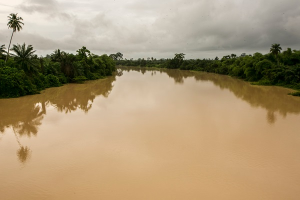
Illegal gold mining, locally called galamsey, has unleashed a toxic tide across Ghana. Rivers that once ran clear now run brown and lifeless. Water engineers have recorded turbidity levels as high as 95,000 NTU, hundreds of times beyond what is safe for treatment. Communities downstream are drinking, bathing, and fishing in water laced with mercury and cyanide. Doctors warn of rising kidney failures, neurological diseases, and birth defects. What began as an economic hustle has become a national emergency threatening public health, food security, and Ghana’s survival.
A Nation Drowning in Its Own Gold
Galamsey, literally “gather them and sell,” started decades ago as simple gold panning by poor farmers. But it has exploded into a sprawling underground industry. Today, hundreds of thousands, possibly over a million Ghanaians, mine illegally using bulldozers, excavators, and dredges. High gold prices, unemployment, and powerful backers including politicians and security officers have fueled the boom.
The consequences are devastating. Once fertile farmland has turned to wasteland, and more than 60% of Ghana’s water sources are contaminated. Official gold exports are distorted as an estimated 60 tons of gold are smuggled out of the country yearly by illegal miners. Ghana’s gold wealth is now bleeding the nation dry.
A Golden Past, a Toxic Present
Gold has always been part of Ghana’s identity, the Gold Coast legacy, but the modern face of mining is darker. Around 2014, the combination of soaring global prices and poverty triggered a full-blown gold rush. Excavators flooded in, rivers were dredged, and mercury and cyanide became the new tools of wealth.
Government crackdowns, like the 2017 and 2022 Operation Halt, briefly seized excavators and arrested offenders. But the effect was short-lived. Politicians accused one another of hypocrisy, and galamsey camps returned as soon as soldiers withdrew. For years, galamsey has been treated as a law-and-order nuisance when it is in fact a national catastrophe.
The Environmental and Human Toll
The destruction is visible from space. The Pra, Offin, Ankobra, and Birim Rivers are choked with mud and poison. The Ghana Water Company warns that without drastic action, some regions could face acute water shortages by 2040.
In forest reserves, miners have cleared more than 500,000 hectares, including sections of 44 protected zones. Cocoa farms, Ghana’s economic backbone, have also been ravaged, with 19,000 hectares destroyed or degraded. Farmers describe the land as “dead,” unable to grow even the hardiest crops.
The water crisis is dire. At the Kwanyako treatment plant near Winneba, turbidity once spiked to 95,000 NTU, nearly 200 times its operating limit. Safe processing requires water under 5 NTU. In places where rivers are too polluted to treat, whole towns now rely on water trucks or boreholes.
Then there is the unseen danger, the poison. Mercury and cyanide, dumped carelessly into pits and rivers, seep into soil and food chains. Scientists warn that mercury remains toxic for centuries, and fish from affected rivers now contain unsafe metal concentrations.
Communities are paying the price in illness and death. Rural hospitals are reporting surges in kidney failure, miscarriages, birth defects, and respiratory diseases. A forensic pathologist described the crisis as “a slow war” against Ghana, finding heavy metals in thousands of placentas. Children, the most vulnerable, play in contaminated streams and inhale dust from mining pits, poisoning their bodies before adulthood.
Voices from the Ground
Across Ghana, people are crying out. In Shama, a coastal town in the Western Region, the sea has turned murky brown. Fishermen burn through their fuel chasing vanishing fish stocks. “The coastline has a solemn deadness,” says Frank Essilfie, a fisherman’s son. “We were hoping Shama could become a commercial port, but galamsey stole that dream.”
In Tarkwa, Prestea, and the Offin Valley, farmers speak of bitter-tasting well water and cocoa trees that no longer bear fruit. A farmer in the Eastern Region clutches his land deed, now a meaningless paper over poisoned soil. “The dirt itself is dead,” he says.
In cities like Accra and Kumasi, students and health workers march through the streets with placards reading “Leaders, You’ve Failed Us” and “We Want to Live, Not Dig Graves.” The frustration is national, a demand for leadership, justice, and survival.
Efforts and Frustrations
The government sworn in in 2025 promised to confront galamsey head-on. The new Lands Minister revealed that nine forest reserves were already entirely taken over by illegal miners. He cited turbidity readings of 5,000 to 12,000 NTU and vast tracts of farmland buried under sludge.
A five-point national plan was launched: tougher enforcement, reforming mining oversight, empowering traditional leaders, deploying technology to track equipment, and intensifying public awareness. Soldiers were stationed at key riverbanks, hundreds of pits were filled, and media coalitions were formed to pressure political leaders.
But progress remains uneven. In many areas, miners simply go underground, literally, and return at night. Recent accidents, including fatal collapses in Ahafo and Obuasi, reveal the human cost of desperation. Civil society groups argue that the fight lacks consistency and transparency.
The Road Ahead
Experts and activists insist that Ghana cannot continue with piecemeal measures. They are calling for a National Emergency on Water Bodies, a full-scale mobilization to clear miners from rivers and forests, backed by law enforcement and real political will.
They propose four urgent actions:
- Enforce the Law Without Fear or Favour – Prosecute not just small-scale miners but also the financiers, politicians, and security officials who enable them.
- Protect Communities and Provide Alternatives – Deliver clean water to affected areas and create new rural jobs to keep youth from illegal mining.
- Ensure Transparency – Publish all mining permits and use satellites and drones to track real-time activity.
- Sustain Public Awareness – Keep media, schools, and civil groups engaged so that apathy does not return.
The Choice Before Us
Ghana stands at a defining crossroads. The poisoned rivers of today foretell a barren tomorrow. Galamsey is not only destroying forests and farms; it is slowly erasing the nation’s lifeblood.
The fight against illegal mining must become a national mission, not a political slogan or a seasonal campaign, but a united defense of Ghana’s right to live. As one commentator put it, “This is not just about gold. It’s about whether we still have a country to call home.”
If Ghana fails to act decisively, the brown rivers will one day stop flowing, not because they’ve been cleaned, but because they’ve died. And when that day comes, no amount of gold will buy the water we have lost.