Ghana scraps capital threshold for foreign investors to attract global funds
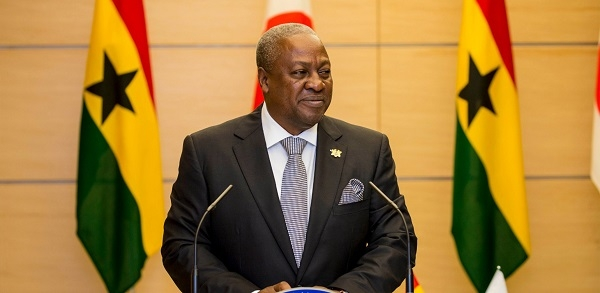
Ghana is moving to eliminate the minimum capital requirement for foreign investors under a review of the Ghana Investment Promotion Centre (GIPC) Act, a policy shift aimed at boosting the country’s competitiveness as an investment destination and drawing in more global capital.
The reform was announced by President John Dramani Mahama at the Presidential Investment Forum in Japan, where he assured international businesses of Ghana’s commitment to creating a more open and investor-friendly climate.
According to the President, the removal of the capital threshold is intended to break down entry barriers that have long discouraged smaller-scale investors and startups from exploring opportunities in Ghana.
“In the reviewed Ghana Investment Promotion Centre Act, we are removing those minimum capital investments. This will enable any investor, however little money you have, to come in and set up a business in Ghana,” President Mahama told participants.
He further pointed to recent improvements in Ghana’s economic indicators as evidence of a stable and attractive environment for business. Inflation, which climbed to nearly 23 percent in 2024, has now dropped to 13.7 percent, with projections of single-digit figures by year’s end. He also highlighted the cedi’s performance, describing it as the strongest among African currencies in 2025, and noted that Ghana’s credit rating has been upgraded to B-minus with a stable outlook.
“These gains are restoring confidence and putting our economy on the path of sustainable growth. We are optimistic that in the next review, Ghana will be upgraded again,” Mahama said.
The President also stressed Ghana’s openness to Japanese firms, many of which are already operating in the country, and invited them to scale up investments.
On her part, Minister for Trade, Agribusiness and Industry, Elizabeth Ofosu-Adjare, described Ghana as a strategic entry point into the wider West African market. She said the reforms should encourage Japanese companies to take advantage of opportunities presented by the African Continental Free Trade Area (AfCFTA).
“Let us move forward with determination, turning today’s dialogue into joint ventures, industrial clusters and supply chains that reflect both Ghanaian resilience and Japanese excellence,” she remarked.
The reform forms part of broader government efforts to expand private sector growth, create more jobs, and consolidate Ghana’s position as a preferred hub for foreign investment in Africa.